
Qualify a MIM supplier on six verifiable axes: a real quality system (ISO 9001 as the baseline), stated equipment scale, confirmed material families, feature-specific tolerance honesty, lot-level traceability, and engineering responsiveness — anything you cannot verify does not count.
This page is written for engineers and sourcing teams comparing metal injection molding suppliers, including offshore qualification from China. It turns the standard screening questions into a working checklist, lists the red flags that end qualification early, and shows what a complete RFQ contains so quotes come back accurate. Emitech’s own answers to every checklist item are stated plainly in the last section — use them as a worked example of the disclosure level a serious supplier should offer.
Start With the Quality System, Not the Quotation
The first filter is a documented quality management system: ISO 9001 is a common baseline for industrial MIM work, though not a universal requirement across every supplier. Program-specific certifications for medical or automotive work matter only when the end use demands them — and no certificate automatically makes a supplier qualified for those industries. Verify certificates independently through the registrar rather than trusting a logo on a website; unverifiable certificates are the most common first-round exit.
Beyond the certificate, ask what the quality system actually produces on your program: first-article inspection packages, in-process control plans, final inspection records, and a documented corrective-action process. A supplier who can only show a sample part — but no FAI structure — has told you how they will run production.
Equipment and Scale: Ask for the Machine List
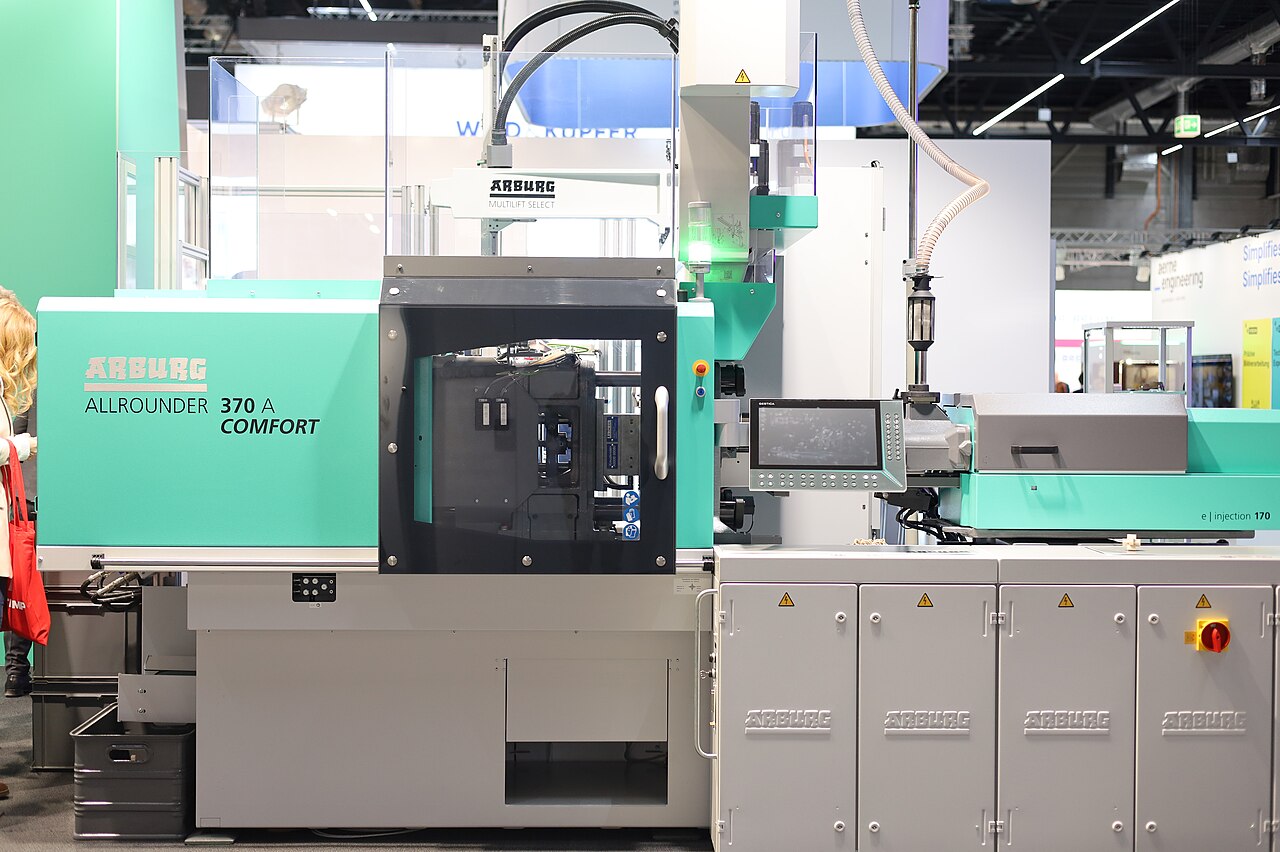
A serious MIM supplier states its equipment in numbers, not adjectives. The list should cover each process stage: molding machines, debinding furnaces, sintering furnaces (continuous and vacuum, which serve different alloy families), and secondary equipment such as sizing presses and grinders. Scale tells you whether your volume fits their sweet spot or gets sandwiched between larger programs.
As a worked example, Emitech runs 17 MIM injection molding machines, 13 debinding furnaces, 22 sintering furnaces (4 continuous + 18 vacuum), 24 sizing presses and 14 grinding machines, with 20+ engineers and an ISO 9001:2015 system — the level of specificity any supplier should match before earning your RFQ. Full details are on the MIM capabilities page.
Confirm the Alloy Families Actually Run In-House
“We make metal parts” is not a material answer. Ask which alloy families the supplier runs in production today, and which would require a new qualification. Commonly cited MIM families include stainless steels, low-alloy steels, titanium, soft magnetic alloys and controlled-expansion alloys — but availability differs by supplier, and a family listed on a brochure is not the same as a running process window.
Emitech’s in-house list: 316L/304/17-4 PH/420/430L stainless steels, 4605/8620/4340 low-alloy steels, Ti-6Al-4V, soft-magnetic Fe-Ni alloys, Kovar ASTM F15 and CoCr ASTM F75, to MPIF Standard 35 / ISO 22068:2012 / ASTM B883. The materials guide carries the per-family details a supplier should be able to produce on request.
Tolerance Honesty Separates Engineers From Sales Decks
Published MIM capability typically sits around ±0.3–0.5 % of nominal dimension; tighter claims (down to about ±0.1 %) apply to selected favorable features, and tighter claims often require secondary operations or simply favorable geometry. A supplier who promises a single blanket tolerance across all features — or quotes tight numbers without a drawing revision, datum scheme and inspection method — is overpromising. Tolerance is feature-specific: it depends on geometry, shrinkage behavior, mold design and process stability.
The right question is not “what tolerance can you hold?” but “which features hold as-sintered tolerances, and which do you recommend finish-machining?” A supplier who answers that question with specifics — as Emitech does with its as-sintered ±0.3–0.5 % band (about ±0.025 mm on features under 3 mm) and about ±0.01 mm on selected critical features after sizing or machining — is doing engineering. See MIM tolerances and accuracy for the full system.
Traceability and First-Article Inspection
Traceability is what turns a good sample into a repeatable process. The strong end of the spectrum links finished parts back through sintering lots, molding lots, blending records and incoming powder lots — so a dimensional drift or a metallurgical anomaly can be isolated to a batch instead of triggering a vague investigation. The weak end is finished-lot labeling only.
For critical features, expect a first-article inspection package, in-process control, final inspection and a corrective-action loop — not a sample-only approval. A single approved sample proves nothing about dimensional stability across lots; lot-level data does.
Offshore Sourcing From China: Red Flags That End Qualification Early
Sourcing MIM parts offshore works at scale, but it shifts qualification burden onto the buyer. The red flags that should end a supplier evaluation early: unwillingness to provide verifiable certificates, recent similar-project evidence, a machine list or inspection reports; no direct factory audit access; overpromising tolerances, density or “one-process” capability without showing process windows; and slow, evasive answers to engineering questions. Buyers who have cycled through multiple suppliers without success consistently report the same root cause: qualification was skipped, not done.
The countermeasure is to run this checklist before the first PO, not after the first failure. Ask for the certificate scope, the machine list, an FAI package from a similar part, and engineering answers with numbers. A supplier who resists disclosure at the qualification stage will not improve after the deposit clears. When offshore qualification is not something your team can staff, that is itself a decision point — be honest about it rather than outsourcing blind.
What a Complete MIM RFQ Contains
A quote is only as good as the RFQ behind it. Include: drawing revision, material grade, critical-to-function dimensions and their tolerances, surface finish requirements, density or metallurgical requirements, inspection requirements (including FAI expectations), annual volume and target unit economics, and any post-processing, finishing or assembly needs. Suppliers should return tooling cost, tooling lead time and piece price as separate lines — bundled “all-in” numbers hide the amortization assumptions.
| RFQ element | Why the supplier needs it |
|---|---|
| Drawing + revision, datum scheme | Tolerance and fixturing decisions; a number without datums is not checkable |
| Material grade | Feedstock family, sintering route, qualification status |
| Critical-to-function dimensions | Where tolerance budget is spent; what gets secondary machining |
| Surface finish / density requirements | As-sintered vs. secondary operation routing |
| Inspection & FAI expectations | Defines the quality deliverable, not just the part |
| Annual volume | Tooling amortization; MIM vs. CNC economics |
| Post-processing needs | Machining, sizing, grinding, finishing, assembly lines |
Volume shapes everything: tooling amortizes over volume, and the break-even point depends on part complexity, material, tolerances and annual volume. Give the supplier the real volume range and let the process recommendation follow — a supplier who quotes MIM for every part without asking about volume is not doing selection work. The tooling cost guide and lead times page set the reference ranges to expect.
Emitech’s Answers to This Checklist
Applying the checklist to ourselves, plainly: ISO 9001:2015 certified (verify through the registrar); machine list as stated above; the material families listed above run in-house; as-sintered ±0.3–0.5 % with secondary operations to about ±0.01 mm on critical features; sintered density 95–99 % of theoretical; quotes within 24 hours, tooling 15–20 days from approved drawings, production 4–6 weeks after tool approval.
Production examples (published anonymously, as customer policy requires): 5G telecom cabinet components in continuous production since 2015 with approximately 50 % weight and cost reduction against the machined baseline; coffee machine grinding discs in 304/420/316 stainless; and lockset components (bolts and cylinders) molded net-shape. Details under NDA — the point of listing them is that a supplier should be able to point to multi-year running programs, not just samples.
Frequently Asked Questions
Q: What certifications should a MIM supplier have?
ISO 9001 is the common baseline for industrial MIM work; program-specific medical or automotive standards matter only when the end use requires them. Verify certificates through the registrar rather than trusting logos — and remember no certificate alone qualifies a supplier for a regulated industry.
Q: What questions should I ask a MIM supplier before sending an RFQ?
Ask which alloy families run in-house today, the machine list by process stage, typical as-sintered tolerance by feature type, what the FAI package includes, how powder-to-part traceability works, and for recent similar-project evidence. Evasive or generic answers predict how production issues will be handled later.
Q: What are the red flags when sourcing MIM parts from China?
Unwillingness to show verifiable certificates, machine lists, inspection reports or similar-part evidence; no factory audit access; blanket tolerance promises without drawing-based review; and slow engineering responses. These are qualification-stage problems — they do not improve after an order is placed.
Q: Is offshore MIM sourcing worth the qualification effort?
It can be — at production volumes the economics are real — but the qualification burden is yours. If your team cannot staff certificate verification, FAI review and audit steps, say so honestly and source domestically instead; skipped qualification is how buyers end up cycling through multiple failed suppliers.
Q: Can one approved sample prove a MIM supplier is production-ready?
No. A single sample proves the geometry is moldable, not that dimensions hold across lots. Production readiness shows in first-article inspection structure, in-process control, lot traceability and corrective-action handling — ask for those records from a running program.
Run this checklist against your shortlist — then send the drawing to the suppliers who survive it. Emitech answers RFQs within 24 hours through the contact page, including tooling and piece-price breakdowns and a DFM review of the part.
Precision Metal Parts from Emitech
Nanjing Emitech delivers MIM, CNC machining, and custom metal parts. MIM services · Request a quote