

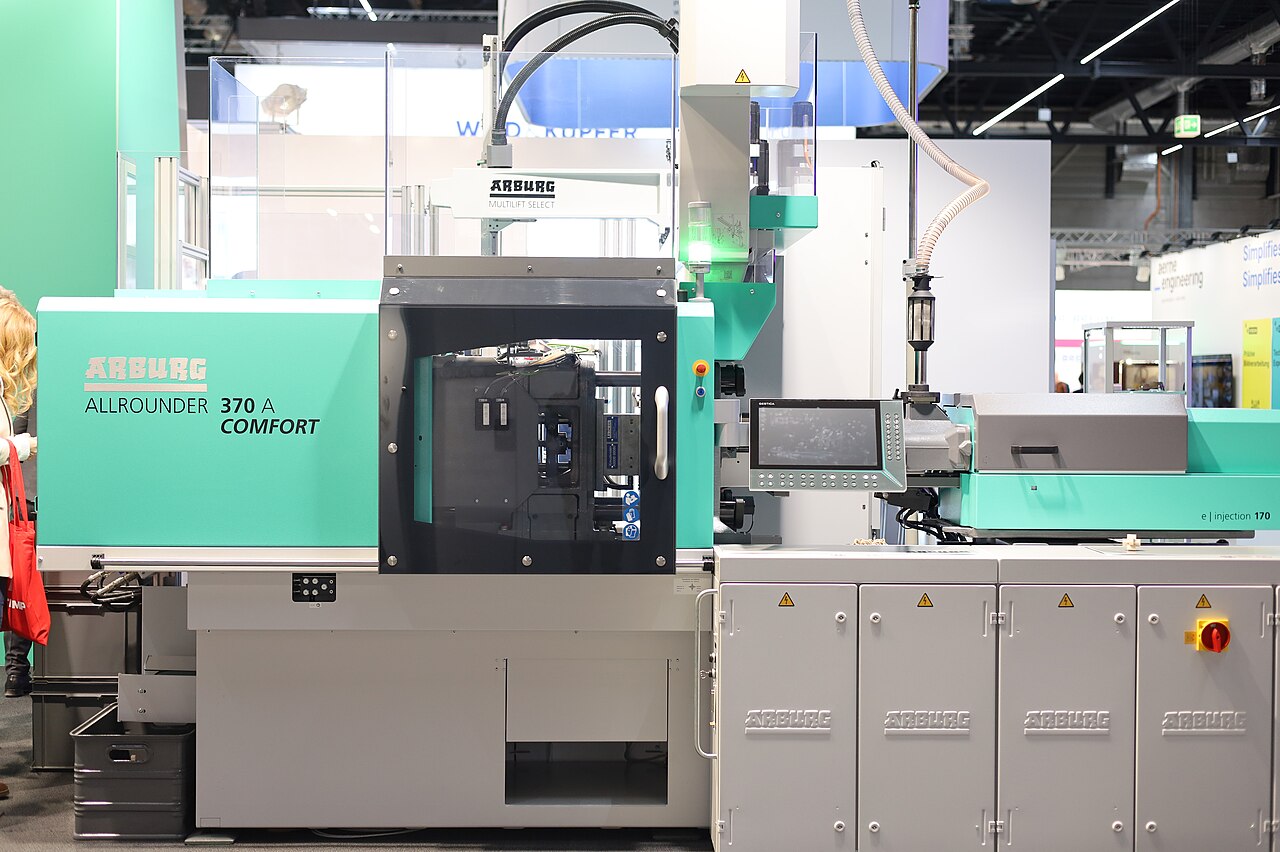
The fundamental difference between metal injection molding and casting is that MIM never melts the metal. MIM molds a powder-and-binder feedstock and sinters the part below the melting point; every casting process — sand, gravity, investment, die casting — pours liquid metal into a mold. That single metallurgical fact drives the downstream differences buyers care about: tolerance, surface finish, alloy coverage and the part size where each process wins. For small, complex parts from 0.1 to 200 g, MIM is usually the stronger candidate; beyond that range, casting takes over.
This page compares MIM against the casting family as a whole. For the die-casting subset specifically — zinc and aluminum high-pressure work — the die casting comparison page goes deeper; for the powder-metallurgy cousin, see MIM vs powder metallurgy. Here the question is the broad one: when does a buyer steer a part away from molten metal entirely.
No Melting: The Metallurgical Root of Every Difference
Casting is humanity's oldest metalworking route: heat the alloy past its liquidus, pour it into a cavity, let it freeze. The process inherits everything that comes with freezing metal — solidification shrinkage that must be fed, gas porosity, draft angles so the pattern or part releases, grain structures that grow from the liquid. MIM sidesteps the liquid phase entirely: atomized powder is mixed with binder, injection molded like plastic, debound, and sintered at a temperature where particles bond by diffusion at 95–99% of theoretical density. The part shrinks uniformly by a known 15–20% but never becomes liquid.
The consequences cascade. No solidification means no shrinkage cavities to feed and far less gas porosity; the remaining porosity in MIM is fine, spherical and closed. No liquid metal means no draft angles — MIM tooling releases undercuts and cross-drilled features that a casting pattern could never form. And fine powder Metallurgy produces a fine, uniform microstructure instead of the cast grain structure that often needs heat treatment to normalize.
The Casting Family vs MIM at a Glance
Casting is not one process but a family, and MIM's advantage over each member differs. The hedged, application-dependent comparison:
| Process | How it forms metal | Typical tolerance (hedged) | Best part size | Volume sweet spot |
|---|---|---|---|---|
| Sand casting | Liquid pour into sand mold | Loosest of the family; generous allowances | Large | Low to medium |
| Gravity / permanent mold casting | Liquid pour into metal mold | Moderate; draft required | Medium-large | Medium |
| Investment casting | Liquid pour into ceramic shell | Best of the casting family | Small to large | Low to high |
| Die casting (Zn/Al) | High-pressure liquid injection | Good; draft and parting lines remain | Small-medium | High |
| MIM | Powder-binder molding + sintering, no melting | ±0.3–0.5% as-sintered; ≈±0.01 mm on treated features | 0.1–200 g | High |
Accuracy and Surface: Where the Gap Is Widest
Cast surfaces are copies of the mold or pattern surface plus whatever the freezing metal did leaving it. Sand casting surfaces reflect the sand texture; die casting shows parting lines, ejector marks and draft; investment casting is the family's best but still works through a ceramic shell. MIM as-sintered surfaces run in a fine range without pattern texture, and secondary operations can improve critical faces further.
Dimensionally, MIM holds ±0.3–0.5% of nominal dimension as-sintered (about ±0.025 mm on features under 3 mm), with sizing or CNC finishing bringing treated features to approximately ±0.01 mm. Investment casting typically works several classes looser than that on small features; die casting is closer but constrained by draft and die wear. For small precision components, the usual ranking puts MIM and precision die casting at the top, investment casting next, sand casting last — with cost rising in the same order per part at volume.
Alloy Coverage: High Melting Points Favor MIM
A casting process is only as good as what the crucible and mold can survive. Zinc and aluminum die casting exist because those alloys pour at temperatures tooling tolerates; stainless steels, tool steels and titanium are sand- or investment-cast with difficulty and specialized shells. MIM's ceiling is set by sintering furnaces instead — and sintering stays below melting, which is why the MIM material list reads 316L, 304, 17-4PH, 420, 430L stainless, low-alloy steels like 4605, titanium Ti-6Al-4V, soft magnetic Fe-Ni alloys and cobalt-chromium. These are precisely the high-melting engineering alloys where casting gets expensive.
The mirror image: pure aluminum and zinc alloys are casting's home turf. Aluminum MIM exists but is a niche; when a part is aluminum and bigger than a matchbox, casting or extrusion is almost always the right answer.
Part Size and the Cost Crossover
MIM's economics are built on a tool amortized over high volumes of very small parts: the sweet spot runs 0.1–200 g and wall thicknesses of 0.5–6 mm, with parts too small to machine economically and too complex to press. Casting economics improve with size — the mold cost per kilogram drops as parts grow, and no sintering furnace ride is needed. Somewhere between a few hundred grams, MIM stops being quotable and casting stops having a competitor.
Volume matters as much as mass. Both routes carry tooling: a MIM mold in 15–20 days from drawing approval, casting tooling on its own schedule. At low volumes neither amortizes well, and the honest comparison includes a third option — machining from bar, or metal 3D printing for complex one-offs. The MIM vs machining and vs 3D printing comparisons cover those crossover decisions.
The Decision Rule
- Small, complex, high-melting alloy, real volume — MIM: the geometry powder-and-binder molding can form (undercuts, cross holes, thin walls) plus sintered tolerances that casting cannot reach at this size.
- Aluminum or zinc, larger than a few hundred grams — casting: die casting for volume, sand or gravity for low volumes, and no reason to fight MIM's size ceiling.
- One-off or prototype — neither: machine it or print it; both casting and MIM amortize tooling and punish small lots.
- Between the zones — quote both: parts in the 100–500 g band with complex geometry are worth parallel quotations, and the answers depend on alloy and tolerance, not on any universal rule.
Frequently Asked Questions
Q: Does MIM melt the metal like casting does?
No. MIM molds a mixture of metal powder and binder, then sinters the part at a temperature where particles bond by solid-state diffusion — the metal never becomes liquid. Casting must heat the alloy past its melting point to pour it. This is why MIM handles high-melting alloys like titanium and stainless steel economically while avoiding solidification defects.
Q: Why can't casting make the small complex parts MIM makes?
Liquid metal needs draft angles to release, feeding paths to compensate solidification shrinkage, and sound surfaces limited by the mold texture. MIM tooling releases undercuts and cross-drilled features because the green part is flexible before sintering, and the uniform 15–20% sintering shrinkage is compensated in tool scaling.
Q: Is MIM more accurate than investment casting?
On small features, generally yes: as-sintered MIM holds ±0.3–0.5% of nominal with critical features refinable to about ±0.01 mm through sizing or CNC. Investment casting is the most accurate casting route but works looser than that on fine features. At larger sizes investment casting keeps its advantage because MIM's part envelope ends around 200 g.
Q: Can MIM replace an aluminum die casting?
Usually not. Aluminum is casting's natural alloy and MIM's weak spot — aluminum MIM exists as a niche. If the part is aluminum and a reasonable casting size, die casting or gravity casting wins. MIM becomes the conversation when the alloy is stainless, titanium or low-alloy steel and the part is small and complex.
Q: Which is cheaper, MIM or casting?
It depends on part size and volume, not on a universal rate. MIM amortizes tooling over high volumes of parts under 200 g where its per-part cost becomes hard to beat; casting amortizes better as parts grow. For a specific part, quote both — the crossover depends on alloy, tolerance and geometry, and honest suppliers will tell you quickly which side of the line a part falls on.
MIM versus casting resolves to one physical question — does this part want to be formed from powder below the melting point or poured as liquid — and one economic question of size and volume. Small, complex, high-melting and voluminous favors MIM; large, aluminum or low-volume favors casting, with machining and printing covering the one-off end. For a part that looks like it sits on the MIM side, the capabilities page and contact form are the next steps.
Precision Metal Parts from Emitech
Nanjing Emitech delivers MIM, CNC machining, and custom metal parts. MIM services · Request a quote